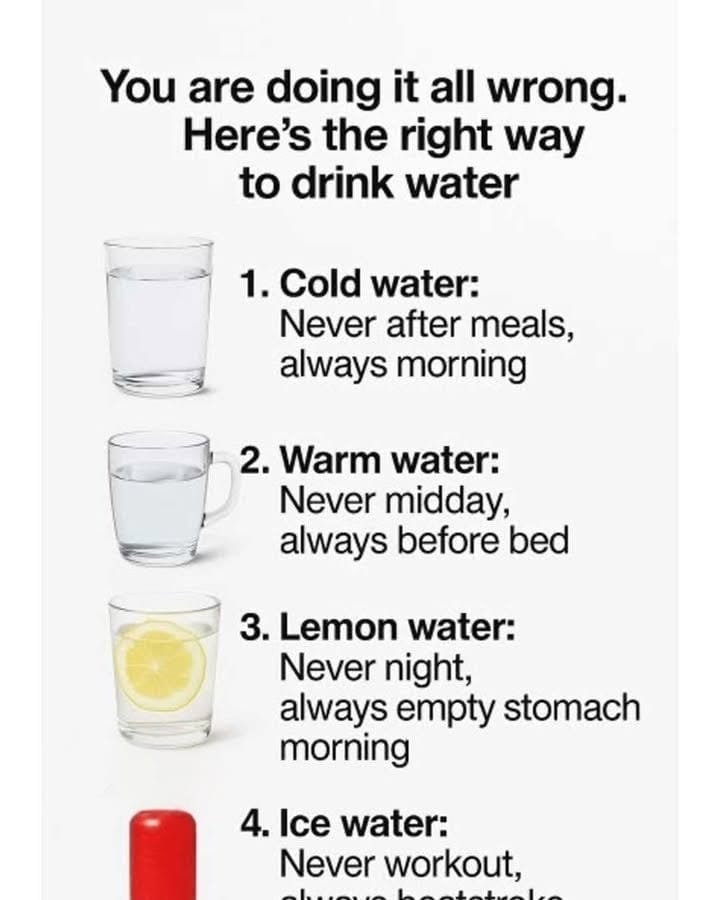
Water is the essence of life, yet many of us might be drinking it incorrectly. Whether it’s the temperature, timing, or quantity, the way we consume water can significantly impact our health and well-being. Misconceptions about hydration abound, leading to habits that might not be serving our bodies in the best way possible.
In this article, we will explore the right ways to drink water to maximize its health benefits. From understanding the roles of cold and warm water to debunking myths around lemon water and exercise hydration, we’ll guide you through optimizing your water intake.
1. Why Your Water Drinking Habits Might Be Wrong
Many people assume that chugging water throughout the day is the best way to stay hydrated, but this isn’t always the case. Drinking too much water at once can lead to water intoxication, a potentially dangerous condition where the balance of electrolytes in your body is disrupted. Instead of drinking large amounts sporadically, aim for consistent hydration with about 8 to 10 cups (roughly 2 to 2.5 liters) spread throughout the day.
Moreover, the temperature of the water you consume can have different effects on your body. Cold water, for instance, might not be ideal in all situations, as it can hinder digestion and slow down the absorption of nutrients. It’s important to understand when and why to choose different temperatures for your water consumption.
2. The Ideal Timing for Drinking Cold Water
Cold water can be incredibly refreshing and has its place in a balanced hydration routine. The best times to drink cold water are during exercise or on hot days when your body needs to cool down quickly. Cold water can help reduce your body’s core temperature more effectively than room temperature water, making it ideal for outdoor activities in the heat.
However, it’s important to listen to your body’s cues. If you feel discomfort when drinking cold water, it may be a sign to opt for a slightly warmer temperature. Additionally, avoid ice-cold water immediately after intense exercise, as it can cause shock to your system and lead to cramps.
3. The Benefits of Morning Cold Water Consumption
Starting your day with a glass of cold water can kickstart your metabolism. Drinking cold water first thing in the morning can help to wake up your digestive system and provide a gentle boost to your energy levels, as your body works slightly harder to warm the water to body temperature.
Consuming about 8 ounces (240 ml) of cold water upon waking helps rehydrate your body after a night’s sleep. This simple habit can improve alertness and cognitive function, setting a productive tone for the day.
4. Why You Should Avoid Cold Water After Meals
While cold water has its benefits, drinking it immediately after meals is not one of them. Cold water can solidify fats from the food you have just eaten, making it harder for your body to digest and absorb nutrients properly. This can lead to digestive discomfort and bloating.
For optimal digestion, it’s best to consume warm or room temperature water after meals. This helps maintain a smooth flow of digestive processes and supports nutrient absorption, ensuring your body gets the most out of the food you consume.
5. Understanding Warm Water: When and Why
Warm water has a calming effect on the body and is often recommended for various health benefits. Drinking warm water can help soothe the digestive tract, reduce pain from cramps and headaches, and improve circulation. It is especially beneficial during colder months when your body seeks warmth.
Warm water is also an effective remedy for congestion and can help alleviate symptoms of colds or respiratory illnesses. It aids in breaking down mucus, providing relief from a stuffy nose or sore throat.
6. The Best Time to Drink Warm Water for Health Benefits
To see the full instructions for this recipe, go to the next page or click the open button (>) and don’t forget to share it with your friends on Facebook
One of the best times to drink warm water is in the morning, ideally with a squeeze of lemon. This combination can help flush out toxins, kickstart metabolism, and enhance digestion. Drinking about 8 ounces (240 ml) of warm water with lemon can act as a mild diuretic, promoting a healthy urinary tract.
Another optimal time for warm water consumption is before bed. A warm glass of water can help relax your body and mind, reducing stress and promoting better sleep. It can also assist in preventing nighttime cravings, as the warmth can create a sense of satiety.
7. Avoiding Midday Warm Water: Here’s Why
While warm water has many benefits, it might not be the best choice during the midday hours when your body is naturally more active and requires cooling. Drinking warm water during midday can lead to increased body temperature and potential discomfort, particularly in warm climates or during physical activity.
During the middle of the day, your body benefits more from room temperature or slightly cool water, which can help maintain a balanced internal temperature and keep you refreshed and energized.
8. Lemon Water: The Perfect Morning Ritual
Lemon water is a simple yet powerful way to enhance your morning routine. The vitamin C and antioxidants in lemons can boost your immune system and improve skin health. Starting your day with a glass of lemon water can also aid in digestion and help balance pH levels in the stomach.
To prepare, simply squeeze the juice of half a lemon into 8 ounces (240 ml) of warm or room temperature water. Avoid using hot water, as it can destroy some of the beneficial compounds in the lemon. This ritual can also support weight loss by promoting a feeling of fullness and reducing appetite.
9. Why Lemon Water Before Bed Is a Bad Idea
While lemon water has numerous benefits, consuming it before bed is not advisable. The acidity in lemons can lead to acid reflux or heartburn, particularly when lying down soon after consumption. Additionally, its diuretic properties can result in frequent trips to the bathroom during the night, disrupting sleep.
If you enjoy lemon water, it’s best to limit its consumption to earlier in the day when your body can make the most of its benefits without interfering with a good night’s rest.
10. The Myths and Realities of Ice Water During Workouts
There’s a common belief that drinking ice water during workouts can hinder performance, but this isn’t entirely true. Ice water can be beneficial during intense physical activity, as it helps keep your core temperature down and can improve endurance by preventing overheating.
However, moderation is key. Sipping on small amounts of ice water throughout your workout can be more effective than gulping large quantities, which can lead to stomach cramps. Listen to your body and find the right balance that keeps you cool and hydrated without discomfort.
11. Ice Water for Heatstroke: A Life-Saving Hack
In cases of heatstroke, ice water can be a critical tool for cooling down the body rapidly. Heatstroke occurs when the body overheats and is unable to cool down, leading to potentially life-threatening conditions. In such situations, ice water can be used both internally and externally to lower body temperature swiftly.
Drinking small amounts of ice water can help reduce core temperature, while applying ice packs or cold towels to pulse points like the neck, wrists, and armpits can enhance cooling. It’s important to seek medical attention immediately in cases of suspected heatstroke, as it requires prompt and professional care.
To see the full instructions for this recipe, go to the next page or click the open button (>) and don’t forget to share it with your friends on Facebook.
