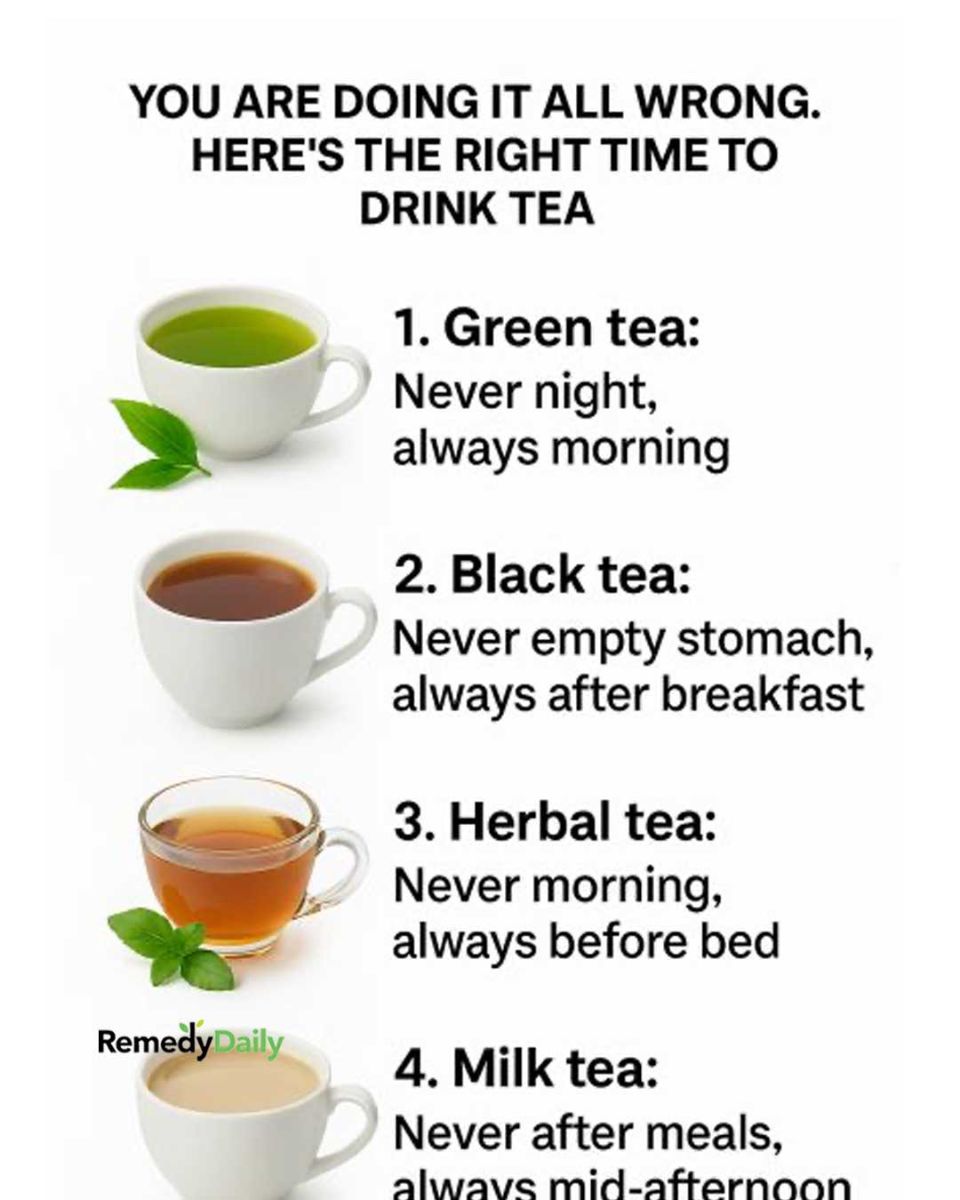
Tea, a centuries-old beverage, is more than just a comforting drink. It holds a plethora of health benefits, ranging from antioxidant properties to aiding digestion. However, the timing of tea consumption can significantly impact the benefits you derive from it. Many of us may be enjoying our favorite brew at the wrong times, potentially diminishing its positive effects.
Understanding when to drink different types of tea can enhance their benefits and align with our body’s natural rhythms. This article explores the optimal times to sip various kinds of tea, backed by science and traditional practices, ensuring you make the most of every cup.
Advertisement
1. Green Tea: Morning, Not Night
Green tea is well-known for its high antioxidant content and metabolism-boosting properties. Drinking green tea in the morning, preferably 30 minutes after breakfast, can kickstart your day with a gentle energy boost, thanks to its moderate caffeine content (approximately 30-50 mg per cup). Consuming it at night, however, might interfere with sleep due to this caffeine.
Additionally, the catechins in green tea can improve fat oxidation, making it an excellent choice for those looking to manage their weight. Morning consumption can also aid in mental alertness and focus, ideal for starting your day on a productive note.
2. Black Tea: After Breakfast, Not on an Empty Stomach
Black tea is richer in caffeine compared to green tea, with about 40-70 mg per cup. Consuming it after breakfast ensures that its caffeine is absorbed gradually, preventing the jitteriness or stomach upset that might occur if drunk on an empty stomach.
Moreover, the tannins in black tea can bind to iron in plant-based foods, so drinking it after a meal rather than before can help with better iron absorption from your breakfast, especially if it’s rich in fruits or grains.
3. Herbal Tea: Evening, Not Morning
Herbal teas, such as chamomile, peppermint, or rooibos, are generally caffeine-free and are celebrated for their calming properties. Drinking herbal tea in the evening can aid relaxation and improve sleep quality. Chamomile, in particular, contains apigenin, an antioxidant that binds to certain brain receptors, promoting sleepiness.
Starting your day with herbal tea might not provide the energy boost needed in the morning, making it less ideal for that time. Instead, save it for unwinding at the end of the day.
4. Milk Tea: Mid-Afternoon, Not After Meals
Milk tea, a popular choice in various cultures, combines the robust flavor of black tea with the creaminess of milk. Drinking it in the mid-afternoon can provide a satisfying energy boost, curbing the common post-lunch energy dip. The caffeine content, combined with the protein and fat from the milk, offers sustained energy without the crash.
Having milk tea immediately after meals isn’t advisable, as it may interfere with digestion and nutrient absorption due to the tannins binding with proteins and minerals.
5. The Science Behind Timing: How Caffeine Works
Caffeine’s effects are primarily due to its ability to block adenosine, a neurotransmitter that promotes sleep, thereby increasing alertness. The timing of caffeine intake can affect your circadian rhythm and energy levels throughout the day.
For optimal cognitive function, consuming caffeine-containing teas when cortisol levels are naturally lower, such as mid-morning or early afternoon, can enhance alertness without disrupting sleep patterns.
6. Avoiding Caffeine Crashes: Timing Your Tea Intake
To prevent caffeine crashes, it’s essential to space out your tea intake throughout the day, particularly if you consume multiple cups. Starting with a caffeinated tea in the morning and switching to herbal teas in the evening can maintain energy levels without leading to a sharp decline.
Combining tea with small meals or snacks can also mitigate the rapid rise and fall of caffeine levels, offering a more stable energy supply.
SEE THE NEXTBPAGE
7. Tea and Sleep: Finding the Right Balance
For those sensitive to caffeine, even small amounts can disrupt sleep patterns. To improve sleep quality, it’s advisable to avoid caffeinated teas at least four to six hours before bedtime. Instead, opt for herbal teas known to aid relaxation.
Understanding your body’s response to caffeine and adjusting tea consumption accordingly can lead to better rest and overall well-being.
8. The Role of Tea in Digestion and Metabolism
Tea, particularly green and peppermint tea, can aid digestion and boost metabolism. Drinking green tea after meals enhances digestion and promotes fat burning, while peppermint tea helps alleviate bloating and discomfort.
Timing your tea to coincide with meals or shortly after can optimize these digestive benefits, supporting weight management and gastrointestinal health.
9. Timing Tea for Optimal Antioxidant Absorption
Antioxidants in tea, such as catechins and polyphenols, are best absorbed when consumed away from meals, as certain food compounds can inhibit their absorption. Enjoying green or black tea between meals maximizes these health benefits.
Additionally, adding a splash of lemon to your tea can enhance antioxidant absorption, providing an extra health boost.
10. Hydration and Tea: Maximizing Benefits
While tea contributes to daily fluid intake, its diuretic effect is mild. Drinking tea throughout the day can support hydration, but it’s important to balance it with plain water to meet your body’s needs.
Ensuring an adequate intake of non-caffeinated beverages, like herbal tea and water, especially in the evening, maintains hydration without disrupting sleep.
11. Cultural Practices: Learning from Tea Traditions Worldwide
Different cultures have unique tea traditions that reflect their understanding of the beverage’s benefits. In Japan, green tea is often consumed during meditation sessions to enhance focus and calmness, while in England, afternoon tea is a social event that provides a gentle energy boost.
Advertisement
Exploring these cultural practices can offer insights into the optimal times for tea consumption and inspire new habits that align with both personal preferences and health goals.
