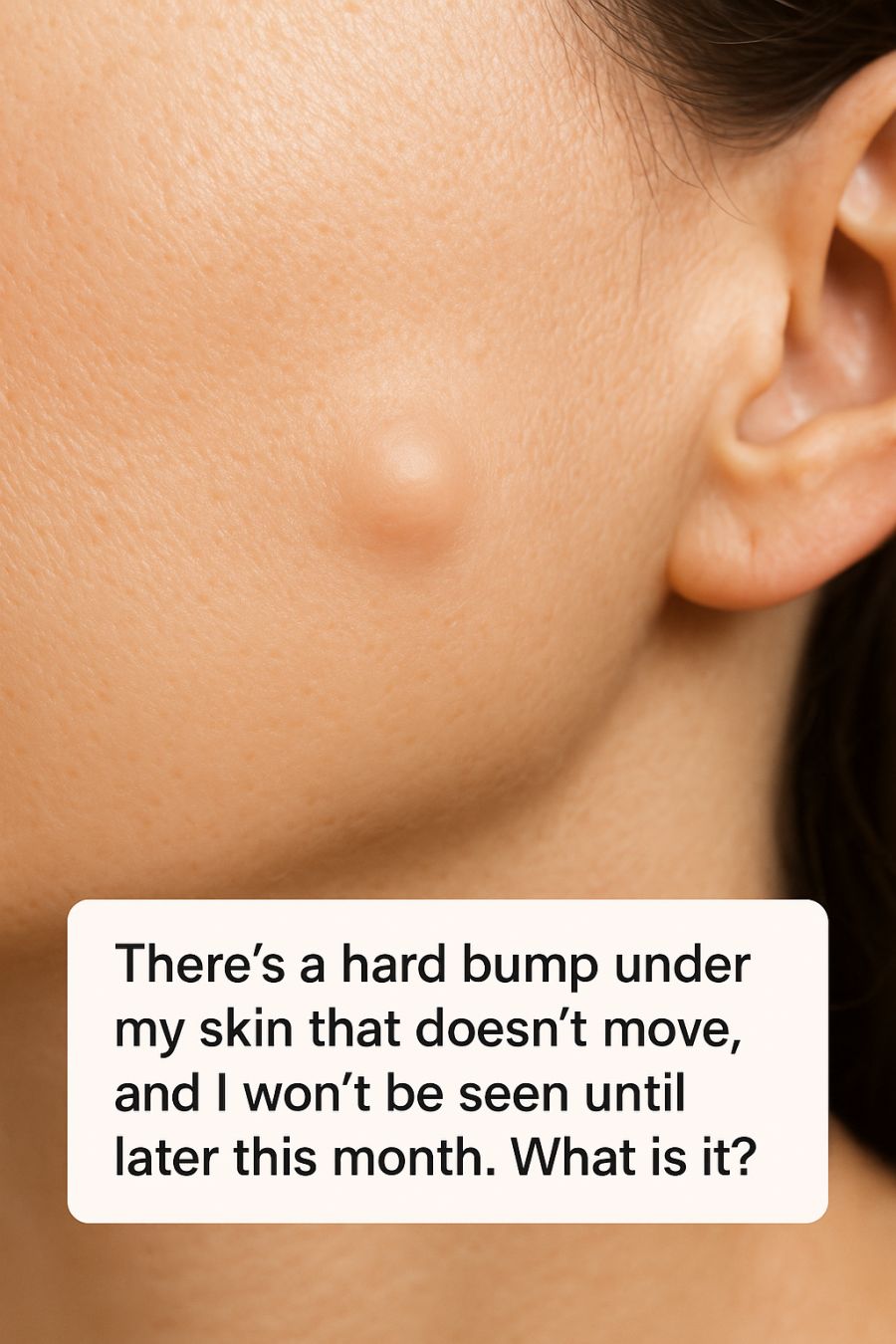
Discovering a hard bump under your skin can be alarming, especially if it doesn’t move. Such lumps can appear anywhere on the body and may vary in size and texture. While it’s easy to jump to conclusions, understanding what these lumps could be is crucial in addressing them appropriately.
Most skin lumps are benign and harmless, but some can be a sign of a more serious condition. It’s important to monitor the bump and note any changes that occur. While waiting for a medical appointment, gaining knowledge about the possibilities can help alleviate some anxiety.
Advertisement
1. Why A Hard, Unmoving Bump Under the Skin Is So Worrying
A hard, immovable bump under the skin can be concerning because it may be a sign of a more serious condition. Unlike cysts or lipomas, which are often soft and can move slightly when touched, a firm, fixed lump might indicate a more serious issue such as a tumor. While not all hard, immovable lumps are cancerous, it’s crucial to have them evaluated by a healthcare professional to rule out malignancy.
2. How Doctors First Examine a Firm Lump That Doesn’t Move
When you visit a doctor with a firm, non-moving lump, the evaluation usually begins with a physical examination. The doctor will assess the size, texture, and location of the lump and may ask about any changes you’ve noticed. They might also inquire about your medical history and any additional symptoms. If necessary, imaging tests like an ultrasound or MRI might be ordered to get a clearer view of the lump’s structure.
3. What An Epidermoid Cyst Is And Why It Feels Like a Hard Pea
An epidermoid cyst is a common type of skin cyst that forms when skin cells multiply and form a sac beneath the skin. These cysts are usually round, firm, and can feel like a hard pea under the skin. They are generally harmless and filled with keratin, a protein component of skin, hair, and nails. Epidermoid cysts can range in size from a few millimeters to several centimeters.
4. Where Epidermoid Cysts Usually Show Up on the Body
Epidermoid cysts can appear anywhere on the body but are most commonly found on the face, neck, and trunk. They may also occur on the genitals or other areas with hair follicles. Although they can appear at any age, these cysts are more common in adults and may become more noticeable after an injury to the skin.
5. Signs Your Hard Bump Is More Likely an Epidermoid Cyst Than Something Else
Epidermoid cysts often have a small central opening, known as a punctum, which may be visible on the surface of the skin. They are typically slow-growing and may not cause any discomfort unless they become inflamed or infected. If the lump is round, firm, and has these characteristics, it’s more likely to be an epidermoid cyst.
6. When a “Cyst” Might Be Something Different: Lipomas, Lymph Nodes, and More
Not all lumps under the skin are cysts. A lipoma, for example, is a benign fatty tumor that feels soft and can move slightly under the skin. Enlarged lymph nodes can also present as firm lumps, particularly in areas like the neck, armpits, or groin, and are usually a response to infection or inflammation. Other possibilities include fibromas or sebaceous cysts, each with distinct characteristics.
7. Red-Flag Symptoms That Mean You Shouldn’t Wait for Your Appointment
Certain symptoms accompanying a hard, immovable lump require immediate medical attention. These include rapid growth of the lump, changes in skin color over the lump, persistent pain, or systemic symptoms like fever or unexplained weight loss. If any of these occur, it’s important to seek medical care promptly rather than waiting for a scheduled appointment.
8. What Not to Do: Squeezing, TikTok Popping Hacks, and DIY Drainage
While it might be tempting to try and pop or squeeze a lump under the skin, especially if you’ve seen it done on social media, doing so can lead to complications like infection or scarring. It’s crucial to avoid home remedies or DIY drainage techniques and instead wait for a professional evaluation. Attempting to remove or drain a lump without proper medical supervision can worsen the situation.
9. Safe At-Home Comfort Measures While You Wait to Be Seen
While waiting for your appointment, there are safe ways to manage discomfort associated with a lump. Applying a warm compress to the area can help alleviate pain or swelling. Over-the-counter pain relievers can also be effective for managing discomfort. However, it’s important to monitor the lump for any changes and avoid applying pressure or attempting to manipulate it.
10. How Epidermoid Cysts Are Diagnosed and Removed in the Clinic
In a clinical setting, epidermoid cysts are diagnosed based on their appearance and, if needed, through imaging tests. If the cyst is causing discomfort or cosmetic concerns, a doctor may choose to remove it via a minor surgical procedure. This involves making a small incision and excising the entire cyst sac to prevent recurrence. The procedure is usually done under local anesthesia, and recovery time is minimal.
11. The Real Risk of Cancer in a Hard, Fixed Lump Under the Skin
While the possibility of cancer exists in any unexplained lump, it’s important to remember that most skin lumps are benign. Cancers, such as sarcomas or lymphomas, can present as hard, fixed lumps, but these are relatively rare compared to benign conditions like cysts or lipomas. A thorough evaluation by a healthcare provider is essential for a definitive diagnosis and peace of mind.
see the next page
Advertisement
12. How to Talk to Your Doctor So You Get Clear Answers About Your Lump
When consulting with your doctor, it’s important to communicate effectively to gain a clear understanding of your condition. Prepare a list of questions beforehand, noting any changes you’ve observed in the lump. Be sure to discuss your medical history and any relevant family history. Asking about the next steps, such as potential tests or treatments, can also provide clarity on the management plan for your condition.
