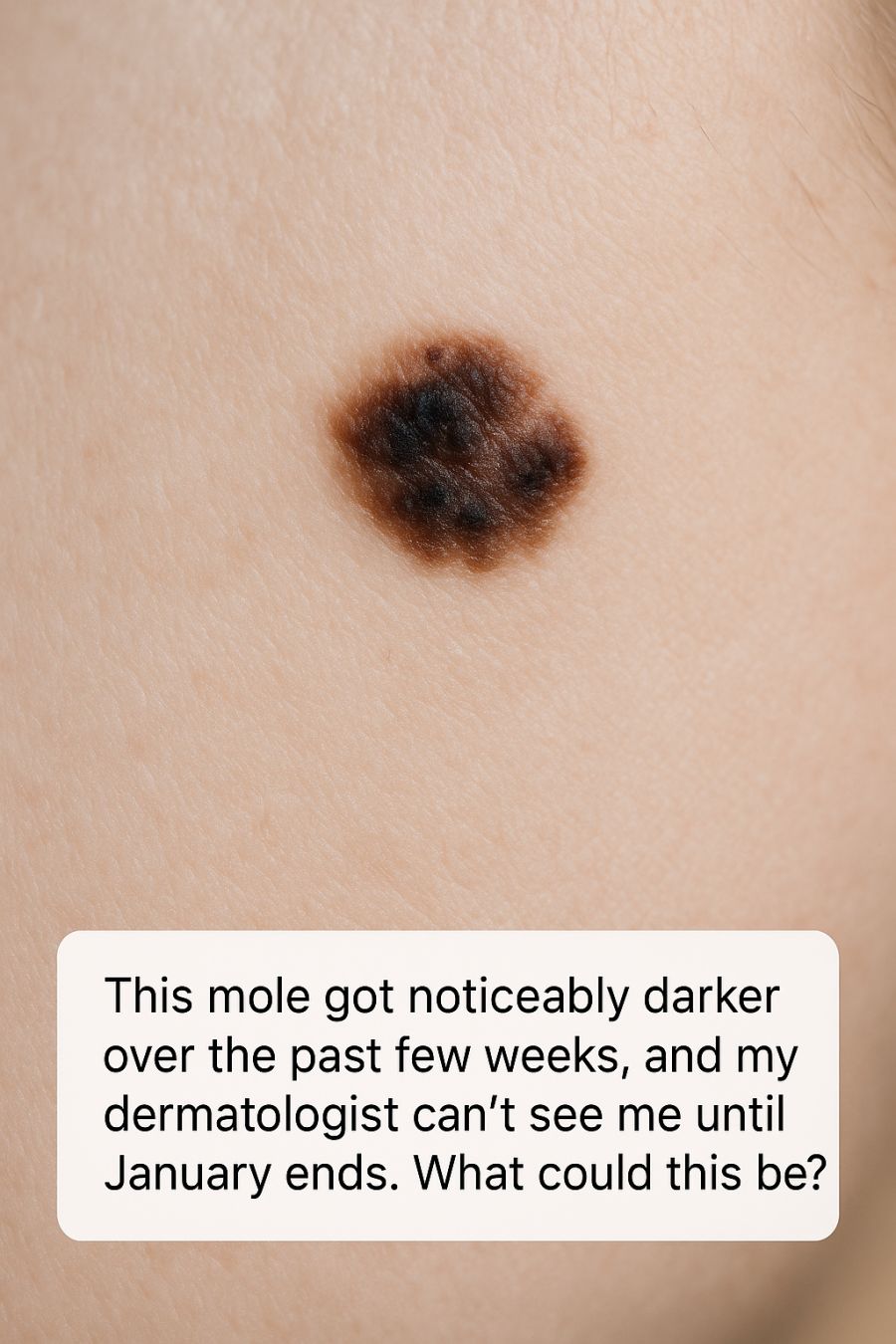
Discovering a mole on your skin that has changed in color can be alarming. Moles, or nevi, are common skin growths made up of pigment-producing cells called melanocytes. While most moles are benign, certain changes in their appearance can sometimes indicate a more serious condition, such as melanoma, a type of skin cancer. When a mole becomes noticeably darker over a short period, it is natural to feel concerned, especially if you cannot see a dermatologist immediately.
Your dermatologist is the best resource for evaluating skin changes, but when you have to wait weeks before your appointment, understanding potential causes and risk factors can help you monitor the situation. This article will guide you through the possible reasons a mole may darken, how to conduct a preliminary self-examination, and what steps you can take to ensure you are well-prepared for your dermatologist visit.
Advertisement
1. Why A Suddenly Darker Mole Deserves Your Attention
A mole that darkens suddenly and noticeably is worth your attention because it could be an early sign of melanoma, a serious form of skin cancer. Melanoma can develop from an existing mole or appear as a new dark spot on the skin. Early detection is crucial, as melanoma is highly treatable when caught early but can be deadly if allowed to progress.
Dermatologists recommend monitoring moles for changes in size, shape, color, or texture. A mole that suddenly becomes much darker, especially within a few weeks, should be evaluated by a professional. While there are benign reasons for a mole to darken, such as hormonal changes or increased sun exposure, it is critical to rule out more severe causes.
2. Understanding What an Atypical (Dysplastic) Nevus Actually Is
An atypical or dysplastic nevus is a mole that looks different from a common mole. These moles may have irregular borders, multiple colors, or a larger size, often exceeding 5 millimeters in diameter. While dysplastic nevi are generally benign, they can sometimes develop into melanoma.
People with multiple dysplastic nevi have a higher risk of developing melanoma, especially if they have a family history of the condition. Regular dermatological check-ups and self-monitoring are essential for individuals with atypical moles. Knowing the characteristics of your moles and observing any changes over time is a vital part of skin health management.
3. Normal Mole Changes Versus Red-Flag Warning Signs
Moles can change over time, and most changes are benign. For instance, moles can darken or lighten due to sun exposure or hormonal changes, such as during pregnancy. However, certain changes should raise red flags.
Warning signs include a mole that becomes asymmetrical, develops an irregular border, changes in color, especially if it has multiple colors, increases in diameter, or evolves in any other way. The appearance of symptoms such as itching, bleeding, or crusting also warrants a closer examination by a healthcare professional.
4. The ABCDE Rule: A Quick At-Home Check While You Wait
The ABCDE rule is a useful tool for evaluating moles and identifying potential signs of melanoma. Each letter stands for an aspect to observe: Asymmetry, Border, Color, Diameter, and Evolving.
Asymmetry refers to one half of the mole not matching the other. Borders should be even, not irregular or scalloped. A mole should generally be a single color, rather than multiple shades. Moles larger than 6 millimeters (about the size of a pencil eraser) are more concerning. Lastly, any evolution or change in the mole’s appearance or symptoms, such as itching or bleeding, should be noted.
5. How Fast Is Too Fast? Timing And Pace Of Color Changes
While moles can change in color over time, rapid changes are more concerning. A mole that darkens significantly over a few weeks should be promptly evaluated. Melanoma can progress quickly, and early intervention is crucial.
Keep track of when you first noticed the change and document any further changes. This information will be helpful for your dermatologist and can aid in determining the urgency of the situation.
6. Sun Exposure, Hormones, And Other Benign Reasons Moles Can Darken
Sun exposure is a common reason for moles to darken, as UV radiation can increase melanin production in the skin. This is why moles often become darker in the summer months.
Hormonal changes, such as those occurring during puberty, pregnancy, or due to certain medications, can also affect mole pigmentation. While these changes are typically benign, it’s still important to monitor any sudden or unusual changes closely.
7. When A Darkening Mole Could Signal Melanoma
A darkening mole could indicate melanoma if accompanied by other warning signs, such as asymmetry, irregular borders, multiple colors, size increase, or evolution in appearance. Melanoma may also present with symptoms such as itching, tenderness, or bleeding.
see the next page
If you notice multiple concerning changes, it’s important to seek medical advice as soon as possible, even before your scheduled dermatology appointment. Early detection and treatment significantly improve the prognosis of melanoma.
8. What Photos And Notes To Take Before Your Dermatology Appointment
Taking clear, well-lit photographs of the mole can be very helpful for your dermatologist. Ensure the photos include a scale, such as a ruler or coin, for size reference. Take multiple photos from different angles to capture the mole’s shape and color.
In addition to photos, keep detailed notes on any changes you observe, including the date you first noticed the change, any symptoms like itching or bleeding, and whether the mole has continued to change. This information will provide your dermatologist with valuable insights and aid in their assessment.
9. Viral TikTok And DIY Skin-Check Hacks: What Helps And What Hurts
Social media platforms like TikTok have popularized various DIY skin-check hacks. While some of these tips, like using the ABCDE rule, can be helpful, others may not be scientifically sound and could lead to unnecessary anxiety or false reassurance.
It’s crucial to rely on evidence-based guidelines and consult healthcare professionals for accurate advice. Misleading hacks can delay proper diagnosis and treatment, so approach viral tips with caution and prioritize professional medical advice.
10. Why You Should Never Burn, Cut, Or “Fade” A Mole At Home
Attempting to remove or alter a mole at home is strongly discouraged. Techniques such as burning, cutting, or using creams to fade a mole can cause scarring, infection, and may obscure the mole’s appearance, complicating a professional evaluation.
Moreover, without a proper diagnosis, removing a mole could potentially leave a malignant condition untreated. Always seek professional medical advice for mole removal or evaluation.
11. How Worried Should You Be Until Late January?
While it’s natural to feel anxious about a changing mole, try to remain calm and focus on monitoring the mole for any further changes. Use the ABCDE rule to keep track of its appearance and take notes as needed.
Rest assured that most moles are benign, and many changes have non-cancerous explanations. However, if the mole changes rapidly or exhibits warning signs, consider seeking medical advice sooner.
12. When To Seek Urgent Care Or An Earlier Dermatology Slot
If the mole exhibits significant changes, such as rapid growth, multiple colors, or symptoms like bleeding, it’s advisable to seek medical attention sooner. Contact your dermatologist’s office to inquire about cancellations or waitlist options for an earlier appointment.
In some cases, urgent care clinics with dermatology services can provide interim evaluations. However, they may not offer the comprehensive care and follow-up that a dedicated dermatologist can provide.
13. What To Expect At Your Skin Exam And Possible Biopsy
During your dermatology appointment, the doctor will conduct a thorough skin examination, assessing the mole in question and any other areas of concern. They may use a dermatoscope, a specialized tool that provides a magnified view of the skin’s surface.
If the dermatologist suspects melanoma or another skin condition, they may perform a biopsy. This involves taking a small sample of the mole tissue for laboratory analysis. The results will help determine the next steps in your care plan.
14. Long-Term Skin Surveillance If You Have Atypical Nevi
If you have atypical nevi, regular skin examinations are crucial for early detection of potential issues. Your dermatologist may recommend more frequent check-ups and self-examinations at home.
Advertisement
Consider documenting your moles through photos and notes, and inform your dermatologist of any changes between visits. Adopting sun protection measures, such as wearing sunscreen and protective clothing, can also help reduce the risk of skin cancer.
