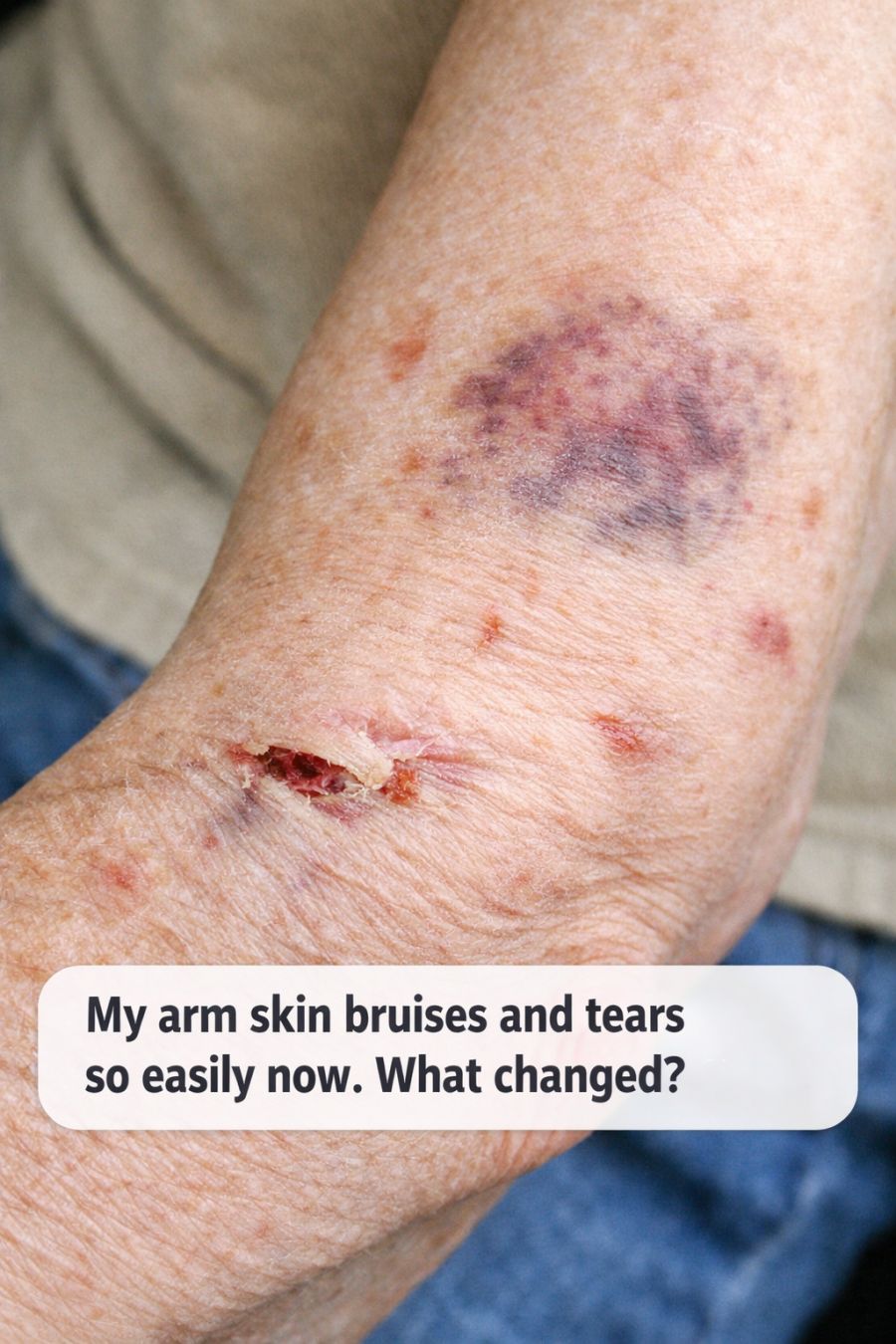
My Arm Skin Bruises and Tears So Easily Now. What Changed?
Introduction
As we age, our bodies experience a multitude of changes, some more noticeable than others. Among these changes, the increased fragility of our skin is a common concern, particularly for those noticing that their arm skin bruises and tears with minimal impact. This sudden shift can be alarming, prompting questions about what might be causing these alterations in skin integrity.
Understanding the underlying factors that contribute to more delicate skin can help in managing and mitigating these changes. From environmental factors to biological processes, numerous elements play a role in the weakening of skin, especially on areas like the arms. In this article, we delve into the reasons behind this phenomenon and explore potential solutions and preventive measures.
Advertisement
1. Why Your Skin Suddenly Bruises and Tears More Easily
Bruising and tearing of the skin can be a result of multiple factors working in tandem. One of the primary reasons is the reduction in skin thickness, which can decrease by up to 1% each year after the age of 20. This thinning makes the skin more susceptible to damage from minor bumps that would have gone unnoticed in younger years.
Additionally, blood vessels in the skin become more fragile as we age, leading to easier bruising. When the skin is thin, these blood vessels are closer to the surface and more prone to breaking with minimal force, causing the appearance of bruises.
2. How Skin Atrophy Thins and Weakens the Arms
Skin atrophy refers to the thinning of the skin layers, and it can significantly impact the arms due to frequent exposure and use. The dermis, which is the thick layer of living tissue below the epidermis, can lose volume as collagen and elastin fibers decrease. This loss can be quantified as a reduction of up to 30% in collagen density by the age of 50.
This process not only makes the skin appear thinner but also reduces its ability to withstand stress. Consequently, minor abrasions or impacts can result in tears or bruises that were previously preventable.
3. The Role of Aging: Collagen, Elastin, and Slower Repair
Collagen and elastin are critical proteins that provide structure and elasticity to the skin. As we age, the production of collagen decreases by about 1% per year after the age of 20. This decline leads to less elastic skin, which is more prone to damage.
Furthermore, the skin’s ability to repair itself slows with age. The turnover rate of skin cells and the healing process can take twice as long in older adults compared to when they were younger. This slower repair process means that minor injuries can take longer to heal and are more noticeable.
4. Sun Damage and ‘Paper-Thin’ Forearm Skin
Chronic sun exposure is a significant contributor to skin thinning, particularly on the forearms, which are often exposed to sunlight. Ultraviolet (UV) radiation breaks down collagen and elastin fibers, accelerating the thinning process.
This damage manifests as ‘paper-thin’ skin, which is more vulnerable to tears and bruises. The cumulative effect of sun exposure over the years can lead to significant changes in skin texture and resilience.
5. Medications That Make You Bruise and Tear Easily
SEE THE NEXT PAGGE
Certain medications can increase the likelihood of bruising and skin tearing. For example, corticosteroids, commonly prescribed for inflammatory conditions, can lead to skin thinning as a side effect.
Anticoagulants, or blood thinners, such as warfarin and aspirin, also make bruising more common by preventing blood from clotting as efficiently. This can result in more pronounced and frequent bruises from even minor trauma.
6. Hidden Medical Conditions That Fragilize Skin and Vessels
Underlying medical conditions can also contribute to increased skin fragility. Conditions like Ehlers-Danlos syndrome, a genetic disorder affecting connective tissues, can lead to easily bruised and torn skin.
Other systemic diseases, such as diabetes and certain autoimmune disorders, can impair skin health by affecting blood flow and collagen production, thereby exacerbating the vulnerability of the skin.
7. Lifestyle Factors: Nutrition, Smoking, and Alcohol
Nutrition plays a crucial role in maintaining skin health. A diet lacking in essential vitamins and minerals, particularly vitamin C and zinc, can weaken skin structure and impair healing.
Smoking has been shown to reduce collagen production and damage skin elasticity, making the skin more prone to tears and bruises. Similarly, excessive alcohol consumption can lead to dehydration and nutrient deficiencies, impacting skin integrity.
8. When Easy Bruising Signals a Blood or Clotting Problem
While easy bruising can be a benign sign of aging, it can also indicate an underlying blood or clotting disorder. Conditions such as thrombocytopenia, where platelet counts are low, can lead to increased bruising.
If bruising is accompanied by other symptoms like frequent nosebleeds, bleeding gums, or blood in urine or stool, it is essential to seek medical evaluation to rule out serious hematological conditions.
9. Everyday Protection Strategies for Vulnerable Arm Skin
To protect fragile skin, wearing long sleeves and using protective padding on frequently impacted areas can help minimize trauma. Moisturizing often with emollient-rich creams can also keep the skin hydrated and more resilient.
Using broad-spectrum sunscreen daily can prevent further sun damage, which contributes to skin thinning. Additionally, being mindful of activities that may cause skin injury can reduce the risk of bruising and tearing.
10. Treatments and Skincare That Can Strengthen Thinning Skin
Topical treatments containing retinoids can stimulate collagen production and thicken the skin over time. These should be used under the guidance of a dermatologist to prevent irritation.
Collagen-boosting supplements and a diet rich in antioxidants may also support skin health from within. Professional treatments like laser therapy can improve skin texture and strength by promoting new collagen formation.
11. When to See a Doctor About Sudden Skin Fragility
If you notice a sudden increase in skin fragility or bruising without any clear cause, it is important to consult with a healthcare professional. They can perform tests to determine if there are underlying conditions contributing to these changes.
Advertisement
Persistent or unexplained bruising, especially when accompanied by other symptoms, should be evaluated by a doctor to rule out serious health issues and to receive appropriate treatment or management strategies.
