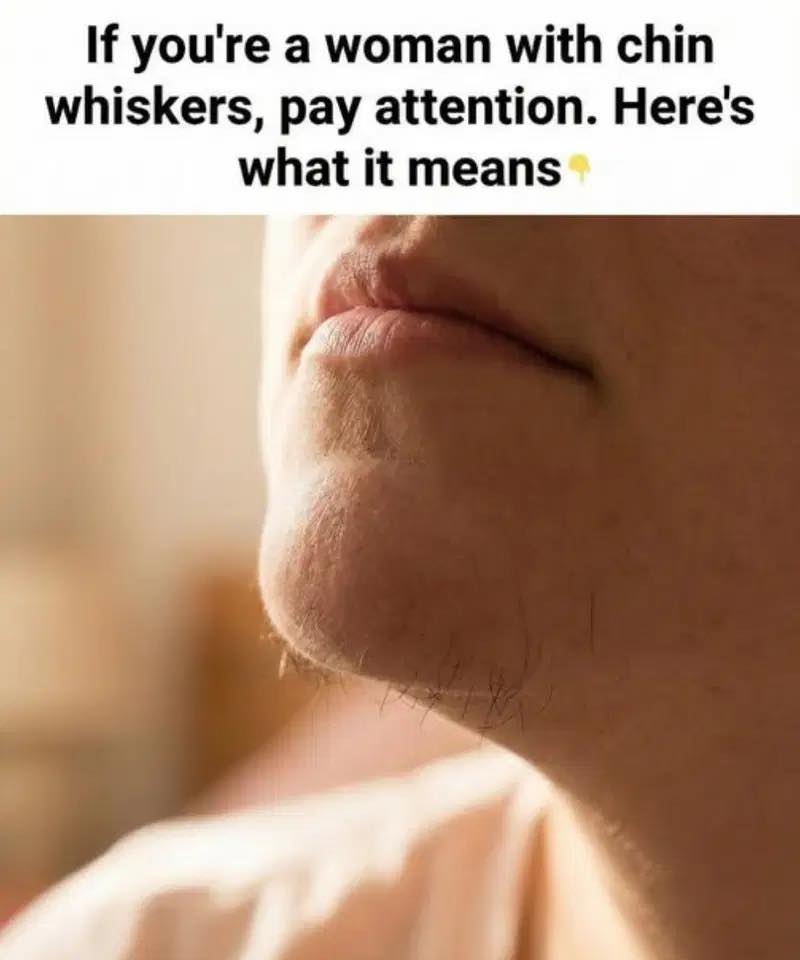
Why Chin Hair Often Appears With Age
Many women notice chin hair becoming more noticeable in their 30s, 40s, or later. Doctors explain that this is often due to declining estrogen levels, especially during perimenopause and menopause.
Estrogen helps counterbalance androgens. As estrogen drops, androgens may have a stronger effect—even if their actual levels don’t rise. The result is subtle but visible changes, including facial hair growth.
This is why chin hair is especially common after menopause and is considered a normal part of hormonal aging for many women.
When Chin Hair Is Completely Normal
CONTINUE READING…>>
To see the full instructions for this recipe, go to the next page or click the open button (>) and don’t forget to share it with your friends on Facebook.
In most cases, chin hair:
Develops gradually
Appears as a few coarse hairs
Is not accompanied by other symptoms
Doctors consider this benign hormonal variation, often influenced by genetics. Some women’s hair follicles are simply more responsive to androgens, and this sensitivity can run in families.
In fact, research suggests that genetics account for a large portion of facial hair patterns in women, meaning chin hair is not always a health signal.
When Chin Hair May Signal a Hormonal Condition
While usually harmless, doctors recommend paying attention if chin hair:
Appears suddenly or rapidly
Becomes thick or widespread
Is accompanied by acne, irregular periods, scalp hair thinning, or weight changes
In these cases, hormonal disorders such as polycystic ovary syndrome (PCOS) or insulin resistance may be involved. PCOS is one of the most common hormonal conditions linked to excess facial hair, but it is not the cause in most women with chin hair.
A healthcare provider can evaluate symptoms through blood tests and medical history to rule out underlying issues.
Stress and Lifestyle Also Matter
CONTINUE READING…>>
To see the full instructions for this recipe, go to the next page or click the open button (>) and don’t forget to share it with your friends on Facebook
Chronic stress can indirectly influence hormone levels by increasing cortisol, which may disrupt the balance between estrogen and androgens. Poor sleep, extreme dieting, and insulin spikes may also play a role.
Doctors note that hormones function as a system, not in isolation. Small lifestyle changes can sometimes reduce unwanted hair growth by supporting overall hormonal balance.
What Chin Hair Does Not Mean
It’s important to clear up common myths. Chin hair does not mean:
You are unhealthy
You are “less feminine”
You have poor hygiene
You did something wrong
Facial hair is a biological response—not a personal failing.
Managing Chin Hair Safely
Doctors say hair removal is a personal choice. Safe options include trimming, shaving, waxing, or laser treatments. Contrary to myth, shaving does not make hair grow back thicker—it only changes the tip shape.
If hair growth is bothersome or emotionally distressing, a doctor can help explore both cosmetic and medical options.
The Bottom Line
Chin hair in women is most often a reflection of normal hormonal changes, aging, and genetics. While it can occasionally signal an imbalance, it is usually harmless.
Understanding the hormonal reasons behind chin hair helps replace shame with knowledge—and reminds women that their bodies are adapting, not failing.
To see the full instructions for this recipe, go to the next page or click the open button (>) and don’t forget to share it with your friends on Facebook.
