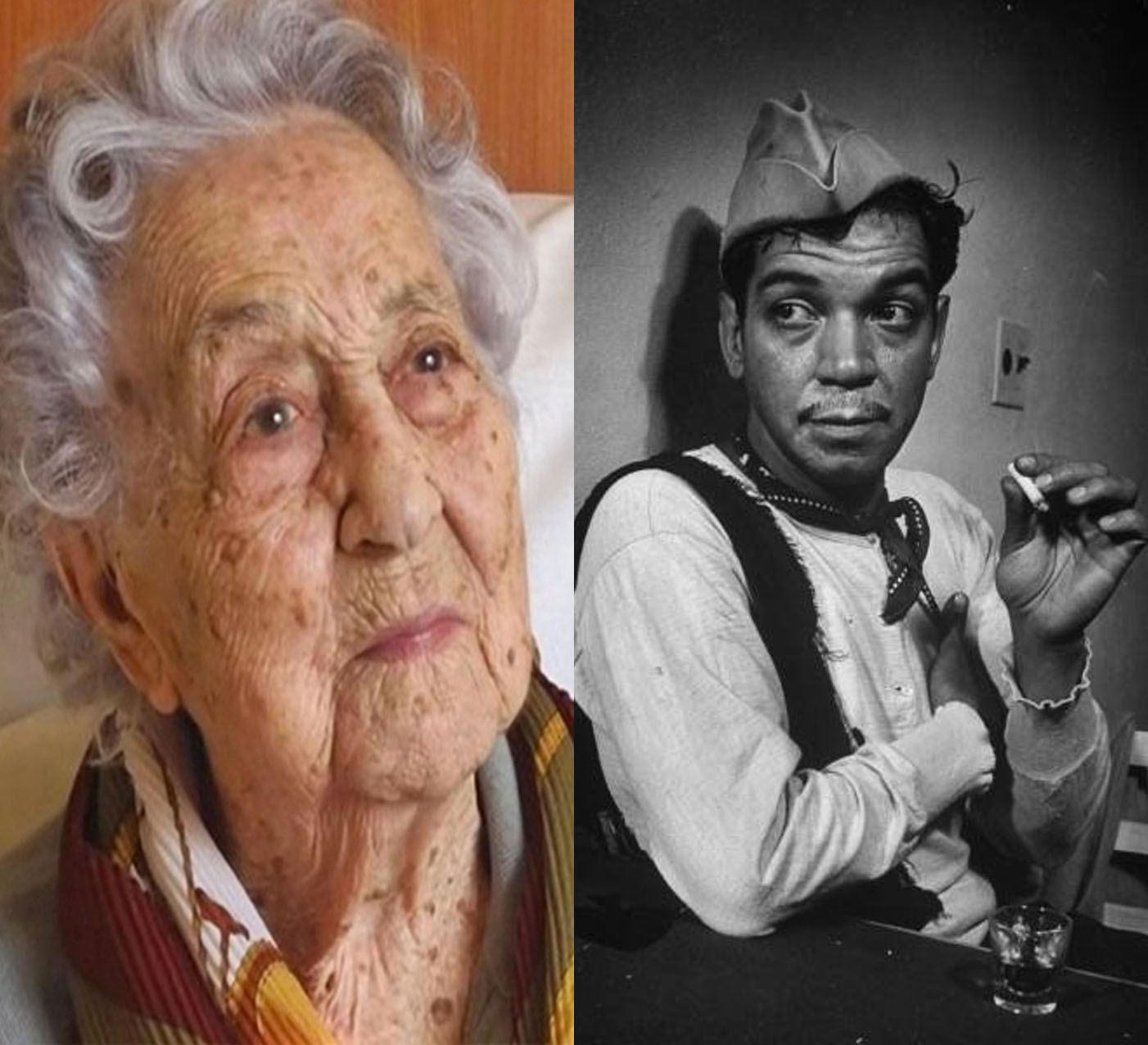
Hello, my name is Elena Vargas, and I’m 94 years old. I know that at my age I should be peacefully enjoying my last days, but there’s something that has haunted me for 70 years. Something I’ve never told anyone, not even my children. It’s a story about the most famous man in Mexico, the comedian who made millions laugh, Cantinflas. But I’m not going to tell you about the Cantinflas you know. I’m going to tell you about the man I knew.
The man who cried at night, the man almost no one truly saw. My name is Elena Vargas. I was born in 1931 in a small town in Guanajuato. I grew up in poverty, like so many others at that time. My father was a farmer, and my mother worked washing other people’s clothes. There were six of us siblings, and I was the oldest. From a very young age, I learned to cook, to clean, and to take care of my younger siblings. School was a luxury I could only afford until I was twelve.
After that, I did nothing but work. When I was 19, in 1950, my mother became seriously ill. The doctors said she needed expensive medicines, treatments we couldn’t afford. My father worked from dawn till dusk. But it wasn’t enough. My siblings were too young to help. So I made a decision. I went to Mexico City to look for work as a domestic servant. The capital was enormous, noisy, and terrifying for a country girl like me. I arrived with a cardboard suitcase and the address of a distant cousin who worked in a house in the Roma neighborhood.
She let me stay in her maid’s quarters while I looked for a job. For weeks I knocked on doors, offered my services, but no one would hire me. I was very young, very inexperienced, very provincial. It was in October 1951 that everything changed. My cousin told me that a lady she knew was looking for a maid for a very important house. She didn’t tell me whose house it was, only that they paid very well and needed someone discreet and hardworking who knew how to cook traditional Mexican food. I dressed as best I could in my most decent clothes and went to the interview.
The house was in the Nápoles neighborhood. It was enormous, elegant, with beautiful gardens and a fountain at the entrance. I rang the doorbell, trembling with nerves. A woman of about 40, serious and well-dressed, answered. She was the house manager. She led me into a small room and interviewed me for almost an hour. She asked me where I was from, what skills I had, if I had family in the city, if I could read and write, and if I could keep secrets. That last question seemed strange to me, but I answered yes, that I was very discreet.
See continues on the next page
She looked me straight in the eyes and said something I’ll never forget. She told me this house was different, that the owner was a very public, very well-known person, and that they needed employees who understood that what happened within those walls had to stay there. I nodded, not fully understanding what she meant. Then she told me his name: “Are you going to work for Mr. Mario Moreno?” Cantinflas. I felt my heart stop. Cantinflas. Cantinflas, the most famous actor in Mexico. I couldn’t believe it.
I had seen his movies at the theater in my town. There, it wasn’t all about blood and sand. That man made us laugh until we cried. He was a national idol, a Mexican pride. The manager smiled at my reaction. She told me that yes, that Cantinflas, but that inside the house he was simply Mr. Mario, an ordinary man who valued his privacy and needed employees he could trust. She offered me the job. The salary was double what other domestic workers earned.
I could send money to my family, pay for my mother’s medicine, and help my siblings. I accepted without a second thought. I started working on November 5, 1951. I had just turned 20. My first day at Cantinflas’s house was like stepping into another world. The house was bigger inside than it looked from the outside. There were enormous rooms with elegant furniture, paintings on the walls, and marble floors that shone like mirrors. There was a library full of books, a dining room that looked like it belonged in a palace, and a huge kitchen with modern appliances I had never seen before.
I was assigned a small but comfortable room at the back of the house, next to the other servants’ quarters. I shared a bathroom with Rosalía, the other housekeeper who had been working there for three years. Rosalía was about 35 years old, quiet, efficient, and from the first day she made the rules clear to me. She told me that Mr. Mario was a good person, generous, and polite, but that he had good days and bad days. On good days he was talkative, joking, and would stay in the kitchen chatting with us while we prepared the food.
On bad days, he would lock himself in his study for hours and didn’t want to be disturbed. He told me to learn to recognize what kind of day it was before approaching him. He also explained that Mrs. Valentina, Cantinflas’s wife, lived in the house, but she had her own routine. She was a beautiful woman of Russian origin, elegant, cultured, but distant. She wasn’t mean to us, she just didn’t pay much attention to us. She lived in her own world of social engagements, events, and meetings with high-society friends.
The first few days I dedicated myself to learning the house routine. I would get up at 5:30 in the morning. I would help prepare breakfast for Mr. Mario, who always came down at 7:00 sharp. He liked red chilaquiles, refried beans, strong Mexican coffee, and sweet bread. He was very particular about his food. Nothing fancy or French. He wanted good Mexican food, the kind you eat in small, local restaurants, the kind that really fills you up.
During that first week, I barely saw him. He would leave early for film studios or business meetings and return late. When he was home, he would shut himself away in his study. I cleaned, cooked, did the laundry, and ironed. It was hard work, but I enjoyed it. The house was clean and organized, and my salary arrived on time every week. It was on the Sunday of my second week that I finally had my first real conversation with him. He hadn’t gone out that day. He stayed home reading the newspaper on the garden terrace.
I was cleaning the living room windows when he came in to get a glass of water. He saw me working and stopped. He asked me my name. I replied that it was Elena, at your service. He smiled and told me I didn’t have to address him formally, that Mr. Mario was sufficient. He asked me where I was from, how long I had been in the capital, and if I liked working there. I answered shyly, still nervous about speaking to someone so famous.
Then he told me something that surprised me. He said that he too had been poor, that he too had come from humble beginnings, that he knew what it was like to work hard to support his family. He told me that as a young man he had been a traveling entertainer, that he had worked in the army, that he had gone hungry before succeeding as a comedian. He told me all this with a kind smile, with genuine humility. That conversation lasted barely 10 minutes, but it made me feel valued. He didn’t treat me like an invisible employee; he treated me like a person.
From that day on, I began to see him differently. He wasn’t just the famous flash bar; he was Mario, a man of flesh and blood. For the next few weeks, the routine continued. I worked, he went out and came back. Mrs. Valentina went to and from her appointments. The house ran like clockwork, but there was something I began to notice, something that didn’t fit with the public image of the most cheerful man in Mexico. At night, when everyone was asleep, I heard footsteps in the hallway.
They were slow, heavy footsteps, going back and forth. At first, I thought it was my imagination or that someone was having occasional insomnia, but it happened every night, always after midnight, always the same routine of footsteps pacing back and forth. One night I got up to go to the bathroom and saw a light under the door of Mr. Mario’s studio. It was 2 a.m. I heard soft music coming from inside. It wasn’t cheerful music; it was melancholic, sad music.
I stood in the hallway for a few seconds, unsure what to do. The next day, I asked Rosalía if Mr. Mario was having trouble sleeping. She gave me a serious look and told me it was best not to ask questions, that everyone had their reasons for doing what they did, that we were there to work, not to pry into the boss’s private life. But I couldn’t help noticing things. During breakfast, Mr. Mario had dark circles under his eyes.
He drank cup after cup of coffee as if he needed the caffeine to function. Sometimes he would stare into space, cup in hand, lost in thoughts that were clearly not happy. When he realized I was watching him, he would smile and crack a joke, reverting to his usual self. In December of that year, 1951, the house was filled with preparations for the Christmas holidays. Mrs. Valentina organized a grand posada for December 16th.
They invited actors, directors, producers, important people from Mexican cinema. We worked for days on end preparing food, decorating the house, cleaning every corner. On the night of the posada, dozens of elegant people arrived: men in expensive suits, women in beautiful dresses and sparkling jewelry. There was mariachi music, hot punch, tamales, buñuelos—all the traditional fare, but on a grand scale. Mr. Mario was the perfect host. He told jokes, made everyone laugh, and joked with the guests. He was the life of the party, but I watched him from the kitchen as he served more food, and something didn’t feel right.
His laughter was loud, his energy contagious, but his eyes were empty. It was as if he were acting, playing a role. When no one looked directly at him, his expression changed. The smile vanished, replaced by something dark, something sad. The party ended around 2 a.m. The guests left praising the hospitality, thanking Mr. Mario for the wonderful evening. When the last guest left, Mr. Mario stood in the doorway for a long time, staring at the empty street.
Then he closed the door slowly and went up to his room without a word. Rosalía and I stayed cleaning until 4 a.m. When I was finally able to go to sleep, I passed by Mr. Mario’s study. There was a light under the door again, and I heard something that broke my heart. I heard sobs, muffled crying, like someone trying not to make a sound but unable to contain their pain. I stood frozen in the hallway. I didn’t know what to do.
I had to knock. I had to pretend I hadn’t heard anything. Finally, I continued walking toward my room, but that night I couldn’t sleep, thinking about what I had heard. The man who made millions laugh was crying alone in his studio at 4 a.m. In January 1952, something changed in the house. Mrs. Valentina began to be absent more often. She said she was visiting friends, that she had social engagements, that she needed to spend a few days in Cuernavaca, but the absences became longer and more frequent.
Mr. Mario didn’t say anything, but he was noticeably quieter, more distant. One afternoon, while I was ironing clothes in the laundry room, Rosalía sat next to me and spoke in a very low voice. She told me that things between Mr. Mario and Mrs. Valentina hadn’t been good for years, that they slept in separate rooms, that they barely spoke when they were alone, that they only pretended to be a happy couple in public. I asked her why they were still together.
Then Rosalía looked at me as if I were very innocent. She told me it was because of his image, the press, the contracts, appearances. Mr. Mario was a symbol of Mexico, the country’s most beloved actor. He couldn’t have a public divorce. That would destroy his image as a family man, a good Mexican. That revelation made me see everything differently. Mr. Mario lived in a gilded cage. He had fame, money, the admiration of millions, but he had no freedom.
He couldn’t be the same. He couldn’t cry in public. He couldn’t admit he was alone. He always had to smile, always act, be the clown everyone expected. In February, something happened that changed my relationship with him. I was in the kitchen preparing dinner when I received a telegram. It was from my hometown. My mother’s condition had worsened. I needed to travel urgently. I burst into tears, unable to stop. Rosalía hugged me and told me to ask for permission to travel. I went to find Mr. Mario, the telegram in my hand, tears streaming down my face.
I found him in his study, reviewing a script. I knocked softly. He saw me, and his expression immediately shifted from concentration to concern. I explained, between sobs, what had happened: my mother was very ill, I needed to travel to Guanajuato as soon as possible, I understood if he fired me, but please, let me go for at least a few days. He listened silently, then got up from his desk and came over. He put a hand on my shoulder and told me that, of course, I could go, that family was the most important thing, and that I shouldn’t worry about work.
Then he took out his wallet and gave me money. It was a lot of money, more than I earned in two months. I told him I couldn’t accept it, that it was too much, but he insisted. He said the money was for the trip, for the doctors, for any medicine my mother might need. He said it wasn’t a loan, it was a gift. He told me he would be waiting for me when I returned to work. Then he called his driver and ordered him to take me to the bus station.
That same night, I cried more from gratitude than sadness. I thanked him again and again. He just smiled and told me to go with God, to take care of my mother, and not to worry about anything else. That night I traveled to Guanajuato with my heart torn between worry for my mother and amazement at Mr. Mario’s kindness. I spent two weeks in my hometown. My mother was very ill, but thanks to the money Mr. Mario had given me, we were able to take her to better doctors and buy better medicine.
She improved slowly; she didn’t fully recover, but she stabilized. When I was finally able to return to Mexico City, I carried in my heart immense gratitude toward that man. I went back to the house at the end of February. Mr. Mario was in the living room when I arrived. He was happy to see me and asked about my mother. I told him that she had improved thanks to his help. He dismissed the matter with a wave of his hand and told me that the important thing was that my mother was well.
From that day forward, my loyalty to Ciel was absolute. No matter what I discovered, no matter what I saw, I would never betray the trust of a man who had helped my family when we needed it most. That loyalty would be tested in ways I never imagined. In March of 1952, I began to notice something else in Mr. Mario’s routine. Twice a week, on Tuesday and Friday afternoons, he would leave the house alone, without a driver, without anyone accompanying him.
He drove himself to some place. He would return two or three hours later, always with a calmer, more relaxed, almost happy expression. One day I asked Rosalía if she knew where Mr. Mario went those days. She looked at me seriously and told me it was best not to ask, that we all had a right to our privacy, that Mr. Mario had never given any explanations and we shouldn’t ask for them. But her tone suggested that she did know something. My curiosity grew.
It wasn’t morbid gossip, it was genuine concern. I had seen Mr. Mario’s sadness. I had heard him cry. I knew something was tormenting him. If those outings made him happy, I wanted to know what they were, perhaps to better understand what that man needed. One afternoon in April, Mr. Mario left as usual in his car, but that day he forgot something. He left a manila envelope on the hall table. I was cleaning and I saw it. I shouldn’t have.
I know, but I opened it. Inside were photos. They were photos of a boy about six or seven years old. A beautiful boy, with black hair, big eyes, a wide smile, and that boy bore an unmistakable resemblance to Mr. Mario. I quickly closed the envelope, my hands trembling. It couldn’t be what I was thinking, but as I continued cleaning, my mind kept making connections. The secret outings twice a week, the photos of the boy who looked like him, the tension with Mrs. Valentina—it all started to make terrible sense.
That night, while Rosalía and I were having dinner in the kitchen, I mustered up my courage and asked her directly. I told her I had seen the photos and that I needed to know the truth. Rosalía put down her plate, sighed deeply, and looked at me with a tired expression. Rosalía made me promise that what she was about to tell me would never leave that kitchen. I swore on my mother’s life that I would keep the secret. Then she told me the story that would completely change how I saw Mr. Mario.
